

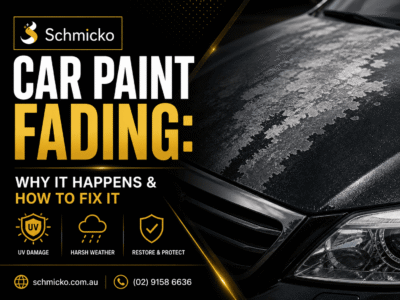
Car Paint Fading in Australia: How to Restore Faded Car Paint and Stop Paint Fade
Table of Contents[Hide][Show]
- Introduction
- Key Takeaway
- What Is Car Paint Fading (And What It Isn’t?)
- Why Car Paint Fades Faster in Australia
- When DIY Can Damage Your Paint: Risks Most Guides Don’t Explain
- The Schmicko Repair vs Protect Matrix: What Should You Do Next?
- How to Prevent Car Paint to Fade Again?
- Can You Restore Car Paint Without a New Paint Job?
- Conclusion
- You May Also Want to Read
- Hi, I’m David
Car paint fading happens when UV rays, heat, and oxidation break down the clear coat, leaving the surface dull, chalky, or patchy. In Australia, this process happens faster due to stronger sun exposure. You can fix early-stage fading with polishing, but advanced damage often needs professional correction or repainting. As experts in this car detailing industry, we commonly find these signs across darker coloured cars such as black and red due to its higher heat absorption and some common tradie vehicles such as commercial utes and vans that may have what you call single stage paint (more prone to UV degradation).
Introduction
Car paint fading is one of the most common issues drivers notice, especially in Australia. You wash your car, but the shine never comes back. The roof and bonnet look worse than the sides. This is not dirt—it’s damage building over time.
The encouraging news is that not all faded paint requires a complete repaint. Light fading often responds well to home polishing methods, while others need professional help. Success depends entirely on accurately assessing your paint’s condition.
This guide walks you through identifying fading stages, understand what caused it, and choose the safest way to restore and protect your car.
Key Takeaway
- Car paint fading is not one single issue—it happens in stages, from light dullness to severe damage.
- Early-stage faded paint can often be improved with polishing and basic restoration methods.
- Advanced paint fade usually requires professional paint correction or a full repaint.
- The most important step is identifying your paint condition before choosing a solution.
- In Australia, strong UV rays and heat speed up fading, especially on exposed areas.
- Regular washing and protecting your car’s paint properly help prevent oxidation, extending your finish well beyond the average lifespan.
- Acting early reduces costs and helps maintain your car’s appearance for longer.
What Is Car Paint Fading (And What It Isn’t?)
Car paint fading is the gradual breakdown of the clear coat and colour layer caused by UV rays, oxidation, and environmental exposure. It is different from scratches or chips because it affects the surface evenly, often making paint look dull, flat, or chalky rather than damaged in one spot.
Modern car paint has three layers: primer, base coat (colour), and clear coat. The clear coat acts like a shield. When it breaks down, the paint beneath loses its shine and depth. This is why faded paint often looks cloudy or washed out.
We’ve seen countless drivers mistake fading for dirt or poor washing. If your car still looks dull after a proper car wash, the issue is likely oxidation. Oxidation occurs when oxygen molecules combine with UV radiation to break down the paint’s protective layers.
Another key difference is texture. Faded paint often feels rough or powdery. Scratches feel sharp or visible in lines. This matters because the solution depends on the type of damage.
This is where the stage-based approach becomes important. Not all faded paint can be treated the same way. Some can be restored. Some cannot. It depends.
Why Car Paint Fades Faster in Australia
Car paint fades faster in Australia because strong UV rays, high heat, and coastal conditions speed up oxidation and break down the clear coat more quickly. Cars exposed to direct sunlight daily can show visible paint fade years earlier than in cooler climates.
The main causes include:
- UV rays break chemical bonds in the clear coat
- Heat accelerates oxidation, drying out the surface
- Contaminants like bird droppings and tree sap damage paint
- Road grime and pollution stick harder in hot conditions
- Lack of paint protection leaves the surface exposed
In Australia, horizontal panels like the bonnet and roof fade first. These areas take the most sun exposure. This is why many cars show patchy fading across the top while the sides still look fine.
Dark colours such as red, black, and blue fade faster because they absorb more heat. White and silver reflect more sunlight, so they hold their color longer.
Here’s what most guides won’t tell you: paint deterioration depends more on daily sun exposure than vehicle age. A three-year-old car parked outside daily can look worse than a ten-year-old car kept in a garage.
The Schmicko Paint Fading Stages (1–4)
Car paint fading happens in stages, from light dullness to full clear coat failure. Identifying your stage helps you decide whether DIY restoration is safe or if professional help is needed.
Stage 1 — Light Dullness and Early Paint Fade
Paint looks slightly dull but still smooth. Shine returns after polishing.
Stage 2 — Noticeable Oxidation and Chalky Texture
Surface feels rough. Paint looks faded or hazy. Polishing helps but cannot restore the original lustre completely. Typical of one stage paints on commercial vehicles like vans and utes.
Stage 3 — Clear Coat Failure and Patchy Fading
Paint looks patchy or uneven. Some areas may look flat or cloudy. home restoration becomes risky and may cause further damage.
Stage 4 — Severe Damage (Exposed Base Coat or Primer Risk)
Clear coat is gone. Paint looks dry, flakey,peeling, or thin. Professional repainting/respraying becomes the only viable solution.
| Stage | Visual Signs | Texture | DIY Safe? | Best Action |
| 1 | Slightly dull | Smooth | Yes | Light polish |
| 2 | Faded, hazy | Rough | Limited | Polish + protection |
| 3 | Patchy, uneven | Very rough | No | Paint correction |
| 4 | Peeling, flat, flakey | Damaged | No | Full respray |
This stage system is the most important decision tool in this guide. It prevents you from using the wrong method and making paint damage worse.
Step-by-Step: How to Restore Faded Car Paint Safely (Stages 1–2 Only)
You can restore faded car paint safely only if it is in Stage 1 or early Stage 2. The process involves cleaning, removing contaminants, polishing, and protecting the surface without removing too much clear coat.
Step-by-step checklist:
- Wash your car properly
Use a pH-balanced car shampoo and a wash mitt. Remove loose dirt and grime. - Use a clay bar
This removes embedded contaminants like tree sap and road grime. - Test a small area first
Apply polish or a light cutting compound on one section to check results. - Polish the surface
Use a machine polish to restore shine. Avoid aggressive abrasive products. - Buff carefully
Use a buffer at low speed and pressure. Avoid edges where paint is thinner. Cross hatch method. - Protect the surface
Apply wax or ceramic coating to shield your paint from fading again. Better yet, a ceramic coating or graphene paint protection for longer term (years) protection
Important: Always work in small sections. If you notice patchy results or no improvement, stop. That means the paint is beyond safe DIY repair.
When DIY Can Damage Your Paint: Risks Most Guides Don’t Explain
DIY polishing can damage your paint if it’s done the wrong way, especially when the clear coat is already thin or faded. The biggest risk is removing too much of this protective layer. Once the clear coat is worn down, it cannot be restored, and the paint beneath becomes exposed.
Many common mistakes lead to this problem. Using a cutting compound too aggressively, holding a buffer in one spot for too long, or polishing edges where the paint is thinner can quickly cause damage. Trying to fix advanced fading at home, especially in Stage 2 or Stage 3, increases the risk even more.
The clear coat is only a thin layer, and polishing always removes a small part of it. Each pass reduces protection, even if the paint looks better at first. This means over-polishing can make your car more vulnerable to oxidation and long-term damage.
If your paint looks patchy, chalky, or uneven, DIY methods are unlikely to fix it safely. At this stage, professional paint correction is the safer option because it controls how much paint is removed and avoids permanent damage. Understanding the signs your car needs paint correction early can save you from far more costly repairs down the track.
Professional Paint Correction vs Respray: What Actually Works?
Professional paint correction restores faded paint by carefully removing a thin layer of damaged clear coat and refining the surface. A respray replaces the entire paint system when damage is too severe.
Paint correction involves:
- Deep cleaning and decontamination
- Machine polishing in multiple stages
- Removing oxidation and swirl marks
- Restoring gloss and clarity
Respraying is needed when the clear coat has failed completely. This usually happens in Stage 4.
Cost comparison (Australia):
| Service | Typical Cost | Result |
| Paint correction | $250 – $500+ | Restores shine |
| Ceramic coating | $900 – $2000 | Long-term protection |
| Full respray | $1800 – $7000+ | New paint finish |
A simple rule:
- Stage 1–2 → DIY or light correction
- Stage 2–3 → Professional correction
- Stage 4 → Respray
Choosing early correction can prevent the need for a costly repaint later.
The Schmicko Repair vs Protect Matrix: What Should You Do Next?
The right choice depends on your paint condition, budget, and how long you plan to keep the car. This matrix helps you decide between DIY, professional correction, or repainting.
| Condition | Budget | Plan | Best Option |
| Light fade | Low | Short-term | DIY polish |
| Moderate fade | Medium | Long-term | Correction + coating |
| Severe fade | High | Keep car | Respray |
| Older vehicle | Low | Sell soon | Basic improvement |
If you plan to keep your car long-term, investing in correction and ceramic coating reduces future paint fade. If the car is older, a full respray may not be worth the cost.
This approach avoids emotional decisions. Instead of guessing, you match your situation to a clear path.
How to Prevent Car Paint to Fade Again?
You can prevent car paint from fading by reducing UV exposure, maintaining regular washing, and applying protective layers like wax or ceramic coating. Prevention is easier and cheaper than restoration.
Simple routine:
- Wash your car every 2–3 weeks
- Dry your car with a microfibre cloth
- Apply wax every few months
- Use a car cover if parked outside
- Avoid harsh cleaners that can damage paint
Protection comparison:
- Wax — lasts around 2–3 months and provides basic protection
- Sealant — lasts around 4–6 months and offers medium protection
- Ceramic coating — lasts more than 5 years and provides the highest level of protection
Ceramic coating for cars offers the strongest protection against UV rays and contaminants. It does not fix faded paint, but it helps prevent future damage.
The biggest factor is consistency. Regular washing and protection reduce the risk of oxidation and keep your car’s finish looking fresh.
Can You Restore Car Paint Without a New Paint Job?
Yes, you can restore faded car paint without a new paint job if the clear coat is still intact. In most cases, light to moderate paint fade can be improved with polishing or paint correction, which removes oxidation and brings back the car’s shine.
A simple way to check is by looking at how the surface reacts after polishing. If the paint starts to regain gloss and looks smoother, restoration is still possible. But if it remains flat, patchy, or shows signs of peeling, the clear coat has likely failed, and repainting becomes the only reliable option.
Timing plays a big role here. Acting early can help you restore faded car paint with less effort and lower cost. Waiting too long allows the damage to spread, which often turns a manageable fix into a full respray.
Conclusion
Faded car paint can feel frustrating, but it becomes much easier to deal with once you understand the cause and the stage of damage. The first step is always to assess how far the paint fade has progressed before choosing any solution.
Basic care can slow down fading, but once oxidation starts, you need to take action. Light cases can often be improved at home, while more advanced damage is safer to handle with professional paint correction or repainting.
Acting early makes a big difference. It keeps costs lower, protects the remaining clear coat, and gives you more options to restore your car’s appearance. Our team at Schmicko is here to help you find the right restoration path for your vehicle.
You May Also Want to Read
You may also want to read:
Clear Coat Protection: Everything You Need to Know About Your Car’s Invisible Shield
Why Car Paint Protection Is a No-Brainer
FAQs
How do you fix fading paint on a car?
You fix fading paint by washing, decontaminating, and polishing the surface to remove oxidation. This works only for early stages. If the paint looks patchy or peeling, professional paint correction or a respray is required to restore the finish safely.
Does WD-40 remove oxidation?
WD-40 can temporarily improve the look of oxidized paint by adding shine, but it does not remove oxidation. It acts as a short-term cover, not a repair solution. Proper polishing is needed to restore faded car paint effectively. We also highly advise against using this method as it is the intended purpose of WD-40, stick to automotive products that are fit for purpose.
How to stop car paint from fading?
You stop car paint from fading by reducing sun exposure, washing regularly, and applying protective layers like wax or ceramic coating. Parking in shade and using a car cover also reduces UV damage and slows paint fade over time.
Can you paint over faded car paint?
Yes, but the surface must be properly prepared first. Faded and damaged paint needs sanding and priming before repainting. Painting/Respraying clear coat directly over oxidation will lead to poor results and peeling.
Why does car paint fade so quickly?
Car paint fades quickly due to UV rays, heat, oxidation, and lack of protection. In Australia, strong sunlight accelerates this process, especially on exposed surfaces like the roof and bonnet. This can also vary between car makes and models along with the colour, darker colours tend to fade faster.
Does ceramic coating stop paint from fading?
Ceramic coating helps prevent paint from fading by adding a protective layer that blocks UV rays and contaminants. However, it does not repair existing damage. It works best when applied after paint correction.
What colour car paint fades the fastest?
Red, black, and dark blue fade the fastest because they absorb more heat and UV exposure. White and silver fade the least because they reflect sunlight more effectively.

Hi, I’m David
author, Automotive tech expert

I am a proficient writer with a preference in creating engaging and informative car content, particularly focused on the Australian automotive industry. With a relentless hunger to deliver to car owners and drivers across the world with the latest emerging trends and innovations in the car space, you have tuned into the right place.