

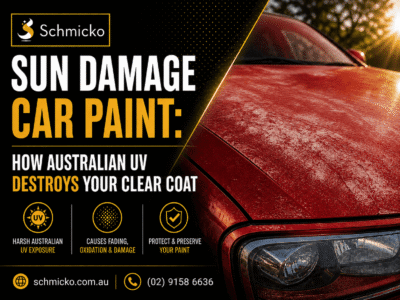
Sun Damage Car Paint: How Australian UV Destroys Clear Coat & How to Protect Your Car
Table of Contents[Hide][Show]
- Introduction
- Key Takeaway
- Why the Australian Sun Damages Car Paint Faster Than You Think
- What Really Happens to Car Paint Under UV Exposure (The Science Made Simple)
- Aussie UV Paint Lifespan Framework (Know Your Risk Before It’s Too Late)
- Early Signs of Sun Damage Most Drivers Ignore (And How to Test at Home)
- When Sun Damage Turns Serious: Clear Coat Failure and Peeling
- Can Sun Damaged Car Paint Be Repaired or Is It Too Late?
- Prevention Hierarchy: What Actually Works to Protect Your Car Paint
- Wax, Sealant, Ceramic Coating or PPF: Which Protection Is Worth It?
- Shade, Car Covers, or Parking Choices: What Makes the Biggest Difference?
- When to Stop DIY and Consider Professional Help (Sydney Drivers Guide)
- Conclusion
- You May Also Read
- Hi, I’m David
Car paint sun damage occurs when intense Australian UV breaks down the clear coat over time, causing fading, chalky patches, and peeling. Once the clear coat fails, the paint underneath becomes exposed and can lead to costly repairs. The key is early detection, smart protection, and knowing when to fix or prevent damage.
Introduction
Living in Australia means your car faces some of the harshest UV levels in the world. That constant sun exposure slowly wears down your car’s paint, even if the damage is not obvious at first. Many drivers notice fading only when it becomes too late to fix easily.
Most people think sun damage only affects appearance. In reality, it affects the protective layer of your car. Once the clear coat weakens, oxidation starts. The surface turns dull, rough, and dry. Over time, this deterioration can lead to peeling and even corrosion of the metal beneath.
This guide helps you understand what is really happening to your car paint. You’ll also discover how to identify early warning signs and take action before the damage becomes expensive. The goal is simple: keep your car looking good and protect its value.
Key Takeaway
- Car paint sun damage occurs when intense UV rays and heat break down the clear coat over time
- Early damage like fading or dullness can be fixed with polishing and protection
- Severe damage, such as peeling clear coat, usually requires repainting
- Parking habits (garage or shade) play the biggest role in slowing damage
- Regular cleaning removes dirt and contaminants that speed up wear
- Using the right protection (wax, sealant, ceramic, or PPF) helps extend paint life based on your risk level
Why the Australian Sun Damages Car Paint Faster Than You Think
Australia’s harsh sun damages car paint more rapidly than other regions because UV levels are higher and exposure lasts longer. Strong UV radiation breaks down the clear coat, while heat speeds up the process. Even on cooler days, UV can still cause serious paint damage without you noticing it.
Australia has one of the highest UV index levels in the world. In many areas, summer UV index can reach extreme levels above 11. This puts your car’s paintwork under relentless environmental stress when parked outside. The sun’s rays hit the same areas again and again, especially the bonnet, roof, and boot.
Heat also plays a major role. Dark cars absorb more heat, which raises the surface temperature. When the car’s surface heats up, chemical reactions happen faster. This speeds up oxidation and weakens the protective layer of the paint.
Parking habits matter more than most people think. A car parked on the street all day will age much faster than one kept in a garage. Even partial shade can slow down damage. This difference becomes clear over a few years.
This is why two cars of the same age can look very different. One might still shine, while the other shows faded paint and chalky patches. The difference isn’t down to luck—it’s purely about exposure levels.
What Really Happens to Car Paint Under UV Exposure (The Science Made Simple)
Modern car paint isn’t simply a single layer. It has three main parts: primer, base colour, and clear coat. The clear coat sits on top and acts like a shield. It protects the colour from UV rays, dirt, and contaminants.
UV radiation slowly breaks down this clear coat. It contains specialised compounds that absorb UV energy, but they do not last forever. Over time, these compounds wear out. Once these compounds break down, your paint loses its protective barrier.
As this happens, oxidation begins. Oxygen reacts with the paint surface, causing it to turn dull and chalky. You may notice the colour fading or the shine disappearing. This is the first stage of damage.
Excessive heat accelerates this deterioration process. When your car sits in direct sunlight, the surface can get very hot. This speeds up chemical reactions inside the paint. The result is accelerated paint breakdown and increasingly visible damage.
Horizontal panels take the most damage. The roof, bonnet, and boot face direct sunlight for long periods. This explains why these panels show fading first. Side panels typically last longer because they receive less direct exposure.
Understanding this degradation process empowers you to make informed protection decisions. You can spot early signs and take action before the damage spreads.
Aussie UV Paint Lifespan Framework (Know Your Risk Before It’s Too Late)
The Aussie UV Paint Lifespan Framework helps you predict how fast your car paint will age. It looks at three things: where you live, how you park, and what protection you use. These factors decide how quickly sun damage appears.
Here’s how the framework breaks down:
| Risk Level | Conditions | Expected Clear Coat Lifespan |
| Low | Garage parking + mild climate | 8–10 years before visible fade |
| Moderate | Mixed parking + some protection | 5–7 years |
| High | Street parking + strong sun | 3–5 years |
| Extreme | Full sun daily + no protection | 2–3 years |
Location matters. Cars in northern or coastal areas face stronger UV and more heat. Inland areas may have less moisture, but UV is still high.
Parking habits change everything. A car parked outside all day in Sydney will age much faster than one in a garage. Even using shade can shift you from extreme to high risk.
Protection also plays a role. Wax, coating, or PPF can slow down damage. But none of them stop UV completely. They only reduce the rate of wear.
This framework helps you understand your situation. Once you know your risk level, you can choose the right steps to protect your car.
Early Signs of Sun Damage Most Drivers Ignore (And How to Test at Home)
Early sun damage is easy to miss. The paint may still look fine from a distance, but small changes start to appear. Catching these signs early can save you from expensive repairs later.
Common signs include fading colour, dull shine, and uneven gloss. Red and dark colours fade faster, so the change is easier to spot. You may also notice that water does not bead on the surface anymore.
Touch matters too. Run your hand over the paint. If it feels rough or dry, oxidation has started. Healthy paint should feel smooth and clean.
You can use this quick checklist:
- Does the paint look less shiny than before?
- Does water spread instead of bead?
- Does the surface feel rough?
- Are some panels more faded than others?
If you answered yes to any of these, your car is in the early stage of sun damage.
At this stage, the paint can still be saved. Polishing and protection can restore shine and slow further damage. Acting early makes a big difference.
When Sun Damage Turns Serious: Clear Coat Failure and Peeling
Serious sun damage happens when the clear coat starts to fail. At this point, the paint cannot protect itself anymore. You may see peeling, cracks, or patchy areas where the shine is gone.
Clear coat failure means the top layer has broken down completely. Once this happens, polishing will not fix the problem. The damage is deeper than the surface.
You may notice peeling edges or white, faded patches. These areas often look dry and uneven. In severe cases, the base colour becomes exposed.
This stage is risky. Without protection, the paint can degrade further. Moisture and contaminants can reach deeper layers. Over time, this can lead to rust and corrosion.
The key thing to understand is this: once the clear coat is gone, restoration options become limited. You are no longer maintaining the paint. You are repairing damage.
This is why early action matters. Waiting too long turns a simple fix into a costly repair.
Can Sun Damaged Car Paint Be Repaired or Is It Too Late?
Yes, sun damaged car paint can be repaired in early stages, but once the clear coat has peeled or failed, repainting is usually the only option. The key is knowing the stage of damage before deciding what to do.
Here is a simple decision guide:
| Damage Level | What You See | Best Solution |
| Mild | Dull, faded paint | Polishing + wax |
| Moderate | Chalky surface | Compounding + correction |
| Severe | Peeling clear coat | Repaint required |
If the paint is only faded, polishing can restore shine. This removes a thin layer of oxidation and brings back the colour. Adding wax or coating after helps protect the surface.
If the paint feels chalky, you may need stronger correction. This involves compounding and machine polishing. It removes deeper damage but requires care.
If the clear coat is peeling, repair is limited. No amount of polishing can fix missing clear coat. In this case, repainting is the only real solution.
Knowing your stage helps you avoid wasting time and money. Many people try DIY fixes on severe damage and get poor results.
Prevention Hierarchy: What Actually Works to Protect Your Car Paint
The best way to protect your car paint is to reduce sun exposure first, then add protective layers. Parking habits matter more than products, and simple routines often make the biggest difference over time.
Here is a practical checklist:
Weekly
- Wash with pH-balanced soap
- Remove dirt and contaminants
- Use microfiber cloth
Monthly
- Inspect for fading or damage
- Apply wax or sealant
Yearly
- Consider coating or professional detail
- Check for clear coat wear
Parking is your first defence. A garage is best, but even shade helps. Using a car cover can block UV, but it must be breathable to avoid moisture build-up.
Cleaning is also important. Dirt and grime make damage worse. Contaminants like bird droppings and sap can speed up paint breakdown.
Consistency matters more than perfection, and following a proper routine to protect your car’s paint can dramatically slow down UV-related fading and oxidation over time. Small habits done regularly protect your car better than occasional treatments.
Wax, Sealant, Ceramic Coating or PPF: Which Protection Is Worth It?
Each protection method works differently, and none of them completely stop UV damage. They slow down the process by adding a protective layer on top of the clear coat.
Here is a comparison:
| Option | Lifespan | Protection Level | Cost per year |
| Wax & Sealants | 1–2 months | Low | Around $50/month or $600/year |
| Ceramic Coating | 4–8 years | High | Around $1000 = $250/year (4 years) |
| PPF | 5+ years | Very High | Around $5000 = $1000/year (5 years) |
Wax and sealants are a simple and cheap, but it wears off quickly.
Ceramic coating forms a stronger layer. It helps resist UV, dirt, and minor scratches. However, it does not block all UV. If you are weighing your options, our breakdown of ceramic coating versus graphene coating will help you identify which technology suits your situation best.
PPF is the strongest option. It acts like a physical shield against damage. It also protects against scratches and debris.
Choosing the right option depends on your budget and risk level. Higher risk means stronger protection is worth it.
Shade, Car Covers, or Parking Choices: What Makes the Biggest Difference?
Parking choices have the biggest impact on sun damage. A car kept in shade or a garage will age much slower than one left in direct sunlight all day. This is the first and most effective step to protect your car paint.
Best Parking Options (From Most to Least Effective)
- Garage Parking
Blocks UV rays almost completely.
Keeps the car cooler.
Slows down clear coat damage the most. - Shade (Trees, Carports, Buildings)
Reduces direct sun exposure.
Lowers surface heat.
Helps delay fading and oxidation. - Car Covers (Used Correctly)
Blocks UV when parked outdoors.
Must be breathable to avoid moisture.
Poor-quality covers can cause scratches. - Street Parking in Direct Sun
Highest risk of sun damage.
Constant UV exposure speeds up fading.
Paint ages faster, especially on roof and bonnet.
Quick Decision Checklist
- Do you have access to a garage? → Use it daily
- No garage? → Park in shade whenever possible
- Parking outdoors all day? → Use a quality car cover
- No protection at all? → Expect faster paint damage
Small changes in where you park can extend your paint life by years. It is one of the easiest and most effective ways to protect your vehicle.
When to Stop DIY and Consider Professional Help (Sydney Drivers Guide)
You should consider professional help when damage goes beyond light fading or when results from DIY fixes are limited. Professionals can assess the condition and recommend the right solution.
Signs you need help include uneven paint, deep oxidation, or peeling clear coat. If polishing does not improve the look, the damage may be too advanced.
A professional inspection includes checking paint thickness, damage level, and protection needs. This helps avoid guesswork.
For Sydney drivers, sun exposure is often high. Cars parked outside regularly fall into high-risk categories. Getting expert advice can save money in the long run.
Professional services also offer better tools and products. They can restore paint more effectively and apply long-lasting protection.
Conclusion
Sun damage is a slow process, but the results can be costly if ignored. Understanding how UV affects your car helps you take action early. Small steps like better parking and regular care can make a big difference.
Choosing the right protection depends on your situation. Some drivers only need basic care, while others may need coatings or PPF. The key is knowing your risk level and acting before damage becomes severe. Our team at Schmicko can help you assess your exposure level and choose a solution that fits your vehicle and budget.
Taking care of your car paint is not just about looks. It protects value and keeps your vehicle in better condition for years.
You May Also Read
You may also read these related blogs:
Clear Coat Protection: What It Is and Why It Matters
FAQs
Does sun damage car paint in Australia faster than other countries?
Yes, Australia has higher UV levels, which means car paint breaks down faster. Strong UV radiation and heat increase oxidation and fading, especially for cars parked outdoors.
Can sun damaged car paint be repaired or reversed?
Yes, mild sun damage can be repaired with polishing and paint correction, which restores shine and removes oxidation. However, if the clear coat has peeled or failed, the damage cannot be reversed and repainting is required.
How long does it take for sun damage to appear on car paint?
Sun damage usually appears within 2 to 5 years, depending on sun exposure, paint colour, and protection. Cars parked in direct sunlight daily will fade and oxidise much faster.
What is the best way to protect car paint from sun exposure?
The best way is to reduce sun exposure by parking in shade or a garage. Regular washing, along with wax, sealant, or ceramic coating, helps slow UV damage and protect the paint.
Is ceramic coating or PPF better for UV protection?
PPF offers stronger protection because it creates a physical barrier over the paint. Ceramic coating still helps, but it mainly slows down UV damage rather than fully blocking it.

Hi, I’m David
author, Automotive tech expert

I am a proficient writer with a preference in creating engaging and informative car content, particularly focused on the Australian automotive industry. With a relentless hunger to deliver to car owners and drivers across the world with the latest emerging trends and innovations in the car space, you have tuned into the right place.